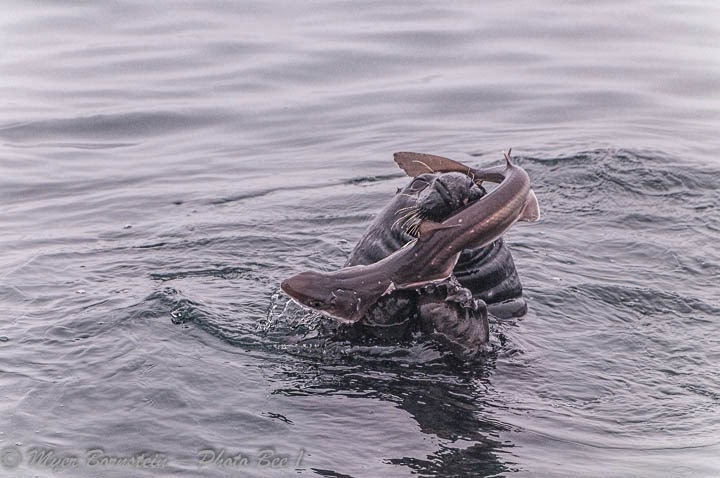
South Beach in Chatham Massachusetts is one of the outstanding birding areas. The beach was originally a portion of Nauset Beach but was broken off during a severe winter storm in January 1987. It reconnected to the mainland in Chatham light. South Beach is a barrier beach just like North and South Monomoy Islands which part of the Monomoy National Wildlife Refuge. The area is always changing due to the effects of the tide and weather. In fact this year South Beach has connected to South Monomoy Island and if you feel like it you can walk from Chatham light all out onto South Monomoy Island. The best way to get out to the tip of South Beach is to take one of the ferries that run out from Chatham.
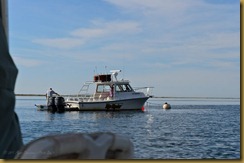
This year I joined the Lloyd Center for Environmental Studies birding trip out to South Beach.


In total there was four of us birding, however on South Beach there were numerous birding groups present.
We picked up our ferry at the foot of the stairs that come down from them Morris island portion of the Monomoy National Wildlife Refuge.

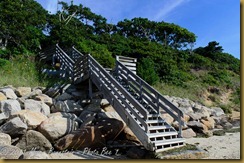
You need to wear shoes that can get wet because you must wade out to get on the boat. It is a shot trip over to South Beach and you land again into the water and walk onto the beach. We spent a total of around six hours on the on the beach slowly traveling northward toward the area on the beach where we get picked up. The West side of the beach is a channel and the East side of the beach abuts the Atlantic ocean. On the Atlantic side a little further North there is a large colony of gray seals and they swim all away down along South Beach. Because of the large colony of seals the area has attracted great white sharks.
 |
| American Oystercatcher |
 |
| Forster's and Common Terns |
 |
| Greater Yellowlegs |
 |
| Hudsonian Godwit |
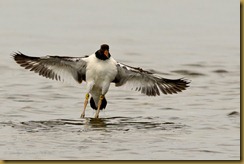 |
| Ameican Oystercatcher Juvenile |
We saw approximately 41 different species of birds including shorebirds, terns, gulls, wading birds and songbirds. The hardest part of the trip was identifying the juvenile birds and the differences in a lot of the shorebirds as some of them were changing from summer into winter plumage.
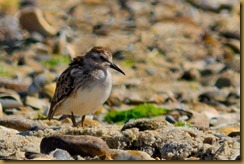 |
| Least Sandpiper |
 |
| Leaqst Tern |
 |
| Marbled Godwit |
 |
| Piping plover |
 |
| Ruddy Turnstone feeding on horseshoe crab |
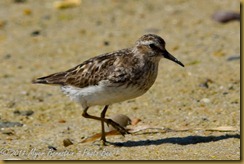 |
| Semipalmated Sandpiper |
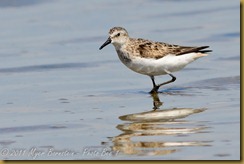 |
| Semipalmated Sandpiper |
 |
| Tree Swallow |
 |
| Whimbrel |
 |
| Willet |
 |
| Gray Seal |
 |
| Great Black-backed Gull |
We spent the last three quarters of an hour sitting on the beach on the Atlantic side observing the seals and the bird flying over the ocean, but alas no great white sharks.
The best time to visit is from mid July and early September for shorebirds and terns and the raptors are most numerous September into early November.
So if you are a birder and/or a photographer this is a great place to visit. Best concentrations of birds are on the incoming tide and best at the periods of the full and new moons because of the height of the tides concentrates the birds more.

Map of the area from last year
So if you plan a visit, make sure you have sunscreen and insect repellent (the green flies can be very bothersome) and water. Also, you do need some food since there is no facilities to buy food on the beach and also there are no bathroom facilities.