Showing posts with label Common Grackle. Show all posts

Monday, April 21, 2014

Meetup Morning at Great Meadows National Wildlife Refuge

Red-winged Blackbird Singing and Displaying
This morning I joined a Meetup group organized by Mike Milica at Great Meadows National Wildlife Refuge - Concord Unit. We met at 5:45 AM in the parking lot where Mike explained that the main object was trying to get male Red-winged Blackbirds displaying on the reeds or on the cattails, plus whatever else we could find to photograph. The plan was that we would all spread out since the dike trail is long enough to support us without being in each other's way.

As we started walking down the trail, the first bird that I observed was a female red-winged blackbird, which I photographed high-key so that I could completely blow out the background.

Female Red-winged Blackbird
Then I joined the group photographing a very cooperative Great Blue Heron who was standing in the water which was flowing in between the two impoundments. Everyone had a chance to obtain photographs of this bird.
Great Blue Heron
The rest of the morning was taken up trying to get the red-winged blackbirds singing and displaying what out being obstructed by objects in front of them by having sticks coming out of their head. It required a lot of patience and moving around to get the best angle.
Red-winged Blackbird In-Flight

Some of the other species that I photographed included a singing Common Grackle in great light showing off its beautiful iridescence. A pair of mute swans went through different display modes, then they mated and displayed again afterwards. Most of the ducks and geese were far away, however, a male Wood Duck swam close to the shore line and required careful placement of the camera and lens in order to get a clean photograph of this beautiful duck.

Common Grackle Show in Its Beautiful Iridescence As It Was Singing
Mute Swans Mating

Mute Swans Displaying after Mating
Wood Duck
Near the end of the meetup, Mike went over manual exposure and how to set exposure utilizing a grey card or an incident exposure meter. Interesting my Nikon D3s was two thirds of a stop on the the recommended reading while my Nikon D7100 was right on. When I am shooting this is something that I have to keep in mind. It was a great day and I met some new friends at hopefully we will get together shooting again in the near future.

Thursday, May 17, 2012

Newport County, Rhode Island

Today is Thursday and it is my regular day for birding with my good friend Doug.  Today we went down to Newport County, Rhode Island, and first birded St. Mary's pond in Portsmouth.  We then went to Miantonomi Park, Newport, which is a well-known birding area.
At St. Mary's pond, an Osprey flew above us, carrying a fish in its talon.  Osprey Flying with fishOsprey Flying with fish


Yellow warblers were flitting around and singing as well, as were Yellow Warbler  -  Dendroica petechia
Yellow Warbler  -  Dendroica petechia


house wrens.  House Wren - Troglodytes aedon


Cedar waxwing's did put in their appearance.  In total, for St. Mary's pond, we ended up with 36 different species of birds.Cedar Waxwing
We then traveled to Miantonomi Park, Newport , where we picked up another 38 different species of birds, of course, there was duplications in the lists.
We were able to observe and photograph a 2nd year male Summer Summer Tanager - Piranga rubraTanager, Summer Tanager - Piranga rubraand then a little later a Cooper's Hawk's did stay around long enough for me to obtain in its picture.
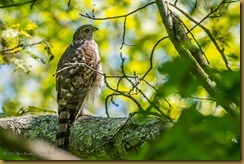


Cooper's Hawk - Accipter cooperii
We observed a white eyed Vireo at a nest, which at first we thought that it was building, but, on further observation the Vireo was returning and taking material from that nest to add to its nest wherever it was hidden.White-eyed Vireo -  Vireo griseusWhite-eyed Vireo -  Vireo griseus


So ended another good day of birding, we did see some deer, rabbits, and butterflies, but that those pictures will be for later.
Warbler, Yellow-rumped Warbler - Dendroica caronata
Yellow-rumped (Myrtle) Warbler
American Robin - Turdus migratorius
American Robin
Common Grackle - Quiscalus quiscula
Common Grackle
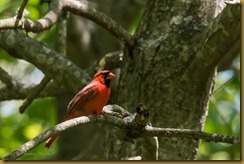
Northern Cardinal - Cardinalis cardinalis cardinalis
Northern Cardinal
Northern Parula - Parula american
Northern Paurula
- _D8C0860 May 17, 2012 NIKON D800
Downy Woodpecker - female
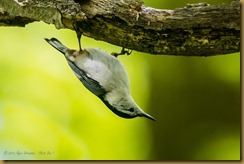
White-breasted Nuthatch - Sitta carolinensis
White-breasted Nuthatch upside down on linb
.

Sunday, June 5, 2011

Black-necked Stilts – Westport Massachusetts

Black-necked Stilts are a rare visitor to Bristol County Massachusetts. The usual range on the East Coast is up to Delaware and southern New Jersey. Last year, a pair of black-necked Stilts were present on the pannes at Allens Pond Massachusetts Audubon Sanctuary and stayed for about two weeks. Many birders came down to see them.
This year, another pair of Black-necked Stilts arrived at the sanctuary and have been foraging on the pannes. One question is these the same pair as was here last year?
I spent around two hours yesterday in a corner of the pannes observing and photographing the Black-necked Stilts. They worked their way up and down the pannes searching for food. They took no notice of me and actually approached within 15 to 20 feet given the exceptionally good views of them.
Black-necked Stilt  _ROT4139   NIKON D3S June 04, 2011 Black-necked Stilt  _ROT4156   NIKON D3S June 04, 2011 Black-necked Stilt  _ROT4161   NIKON D3S June 04, 2011 Black-necked Stilt  _ROT4168   NIKON D3S June 04, 2011 Black-necked Stilt  _ROT4220   NIKON D3S June 04, 2011 Black-necked Stilt  _ROT4248   NIKON D3S June 04, 2011 Black-necked Stilt  _ROT4284   NIKON D3S June 04, 2011 Black-necked Stilt  Black-necked Stilt Flight_ROT4247   NIKON D3S June 04, 2011 Black-necked Stilt  Black-necked Stilt_ROT4304   NIKON D3S June 04, 2011
"Their diet consists of brine shrimp and brine flies, other aquatic insects and insect larvae, small fish, snails, and frogs. Black-necked Stilts forage by wading through the water, picking and jabbing with their bills, and sometimes submerging their heads and upper breasts to nab prey. They also sweep their bills from side to side as they walk."
Since this is the time of their breeding, it be wonderful if they would establish a nest at the sanctuary, we can only hope.
Besides the Black-necked Stilts that were on the pannes, there were also Willits, Great Egret, peeps and the usual blackbirds. bnsbl   _ROT4122   NIKON D3S June 04, 2011 Mallardbnsbl   _ROT4242   NIKON D3S June 04, 2011 Willetbnsbl   _ROT4322   NIKON D3S June 04, 2011 Willetbnsbl   Common Grackle_ROT4124   NIKON D3S June 04, 2011 Common Gracklebnsbl   Great Egret flight_ROT4357   NIKON D3S June 04, 2011 Great Egretbnsbl   Great Egret_ROT4335   NIKON D3S June 04, 2011 Great Egret
If you are in the area I would recommend a trip to Allens Pond Massachusetts Audubon Sanctuary in Westport Massachusetts and walk on the Beach Loop toward the culvert. Then look to the right along the back side of the pannes.allenspond_trails