 |
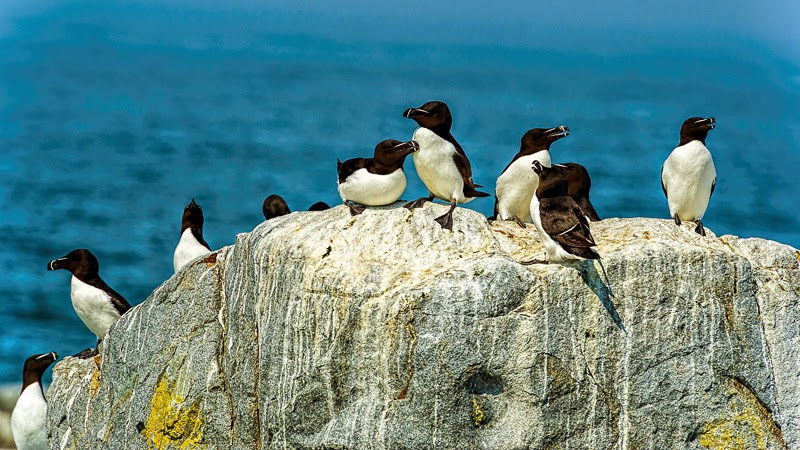
| Razorbills On the Rocks at Machias Seal Island |
Besides all the Atlantic puffins that are on Machias seal island. There is also a large colony of razorbills probably numbering up to 4000. A number of the razorbills were putting on a show or either talking to one another or squabbling. Since I can't speak razorbill I do not know what they were saying.
I captured two photographs of one pair of razorbills yakking with another razorbill on the side of them. The first picture, I like how this third razorbill was looking at the other two razorbills with its mouth open, possibly saying stop it or whatever. The second picture had the third razorbill, looking away from the other two razorbills, but, the two other razorbills to me had a better pose.
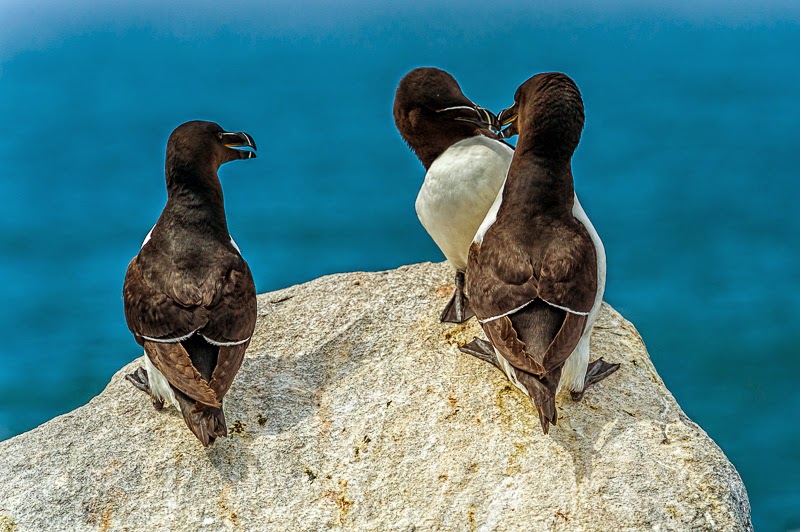 |
| Razorbills, picture number one, I like the way the third bird is looking at the other two birds and has its mouth open |
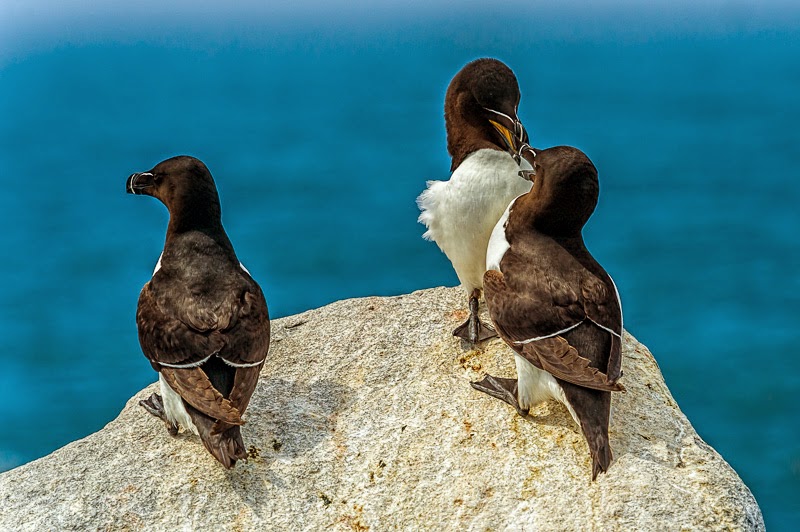 |
| Razorbills, picture number two I like the way the two birds have their mouth open, but don't like the third birds, looking away |
So what to do? I decided to use Photoshop to see if I could combine both of the pictures into one which expresses my feelings on the scene. Here's how I did it, I I took the first picture and edited in Lightroom to give me the look I wanted. Next I utilized Topaz clarity and detail to enhance the picture. After this, I took the first picture without the Topaz enhancements and in Lightroom synchronized the second picture, then I took the second picture and enhance it also with Topaz clarity and detail settings. Now the fun begins. I opened the two images in Photoshop, created a new image with the same dimensions as the original two images. Under the Windows Menu> Arrange> Float All in Windows. Then I selected the first of the two images and dragged it onto the new image file, repeated the same action again with the second image. The layer panel now will contain two new layers, one for each of the original pictures. Now you select both of the layers and in the Edit Menu , choose Auto-Align Layers and check Reposition Only then click OK. Click on the top layer and in the layers panel Choose Layer> Layer Mask> Reveal All and add a layer mask to the chosen layer. Using a black brush. I painted to reveal the image that I wanted. When I had the image looking like the way I wanted it to. I flatten the image and saved it. Here is the result.
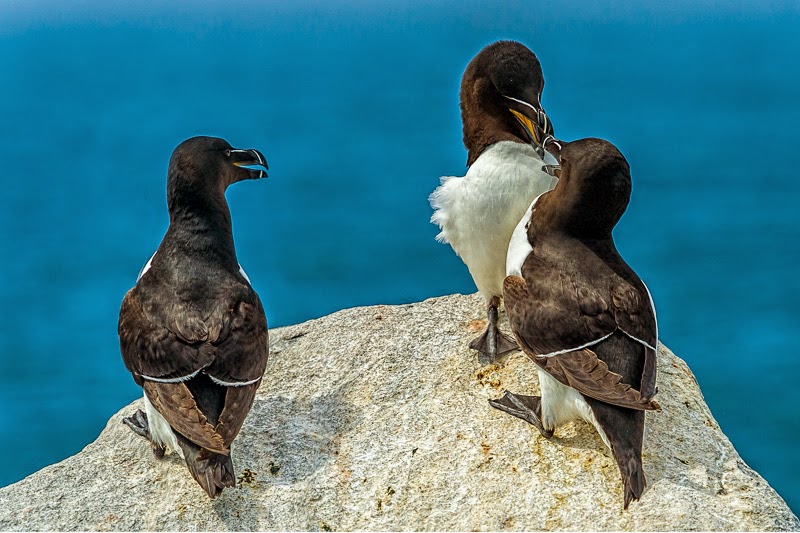 |
| Razorbills, the composite picture, I like this picture because all the birds have their mouth open. | | |
Using the coupon code mborn you will receive a 15% discount on any or all of the Topaz plug-ins.

Help Support my blog by purchasing from Amazon. Clicking on this link and utilizing the link does not cost you anything.
BUY FROM AMAZON


