Showing posts with label Gulls. Show all posts

Saturday, May 7, 2016

More on the Nikon D500

Great Blue Heron
The Nikon D500 is an excellent camera.  But, it is complicated and does take the time to learn all its nuances.  In fact, Nikon has published two manuals for this camera.  The first manual is the standard overlooking all law knobs and controls that make up the camera and the second manual just deals with all the settings in the custom menu.

While browsing Facebook this morning, I saw an article talking about the Nikon D5 and it is focusing.  I went to the home page of https://www.facebook.com/richardwildlife/?ref=br_rs and then went to his blog site http://www.richardcostin.com/articles/nikon-d5-review-diary/.  The one item I did not read was what settings did he use for autofocus.  However, I asked the question on his Facebook site, and Richard kindly answered me with what settings to utilize.  He recommended using" mostly AFC dynamic 153. The standard dynamic modes are very trustworthy!"

Although today was overcast, foggy and intermittent drizzle.  I traveled down to Plymouth, Massachusetts and visited both Jenny pond and Nelson Beach, where I tried out the settings.  Because the light was uniform,  I set my camera manually at 1/1250, F/5.6, ISO 1250 with the exposure meter set to +1.  I use the AFC dynamic range of 153.  The majority of my pictures of birds in flight were sharp, and the noise was quickly taking care of and processing.

For the wildlife photographer, the Nikon D500, I believe will become standard in its use.
Mallard Landing
Herring Gull Landing
Ring-billed Gull in Flight

Saturday, August 29, 2015

Gulls, Gulls, and More, Gulls

Gulls in-flight
While you are out enjoying our natural world and photographing the interesting items that there, do not forget about very common site, so species that you see.  Because goals are very common.  Many people ignore them, but they are a excellent subject to learn bird photography.  The reason is that gulls are easy to photograph in flight, especially when they hover two it is easy to bring them into a Jew by offering them a treat such as a piece of bread and, except when they are resting.  They are usually doing interesting things.  What also makes gulls an interesting subject is to identify the different plumages that gulls go through.  Depending on the species they can take anywhere from 2 to 4 years for that species of gold to get their adult plumage.  Also, a number of gulls change plumage between summer and winter.  This can make it harder to identify what species of gulls you are viewing.  Also, Southern New England, we will occasionally get a rarity such as an ivory gull.  Remember what is common now in the past was a rarity.  I remember while in high school and working at the Museum of science a great sighting that would see on the dock at the Charles River was a great black-backed gull.  Right now, laughing gulls breed here in New England and yet it was not that long ago that they were a rarity.

Ring-billed Gull
Juvenile Herring Gull Begging for Food
Adult and Juvenile Laughing Gull
Ring-billed Gull Searching for Food
Ring--billed Gull
Juvenile Herring Gull with Food
"Crossbill" Laughing Gull
 Despite having it is bill crossed this juvenile laughing gull seems to be well nourished
Great Black-backed Gull Fighting over Food
Great Black-Backed Gull Taking Off
Ivory Gull
So when you go out, do not forget what is now called common.

Thursday, August 27, 2015

Weather Changes

Sanderling
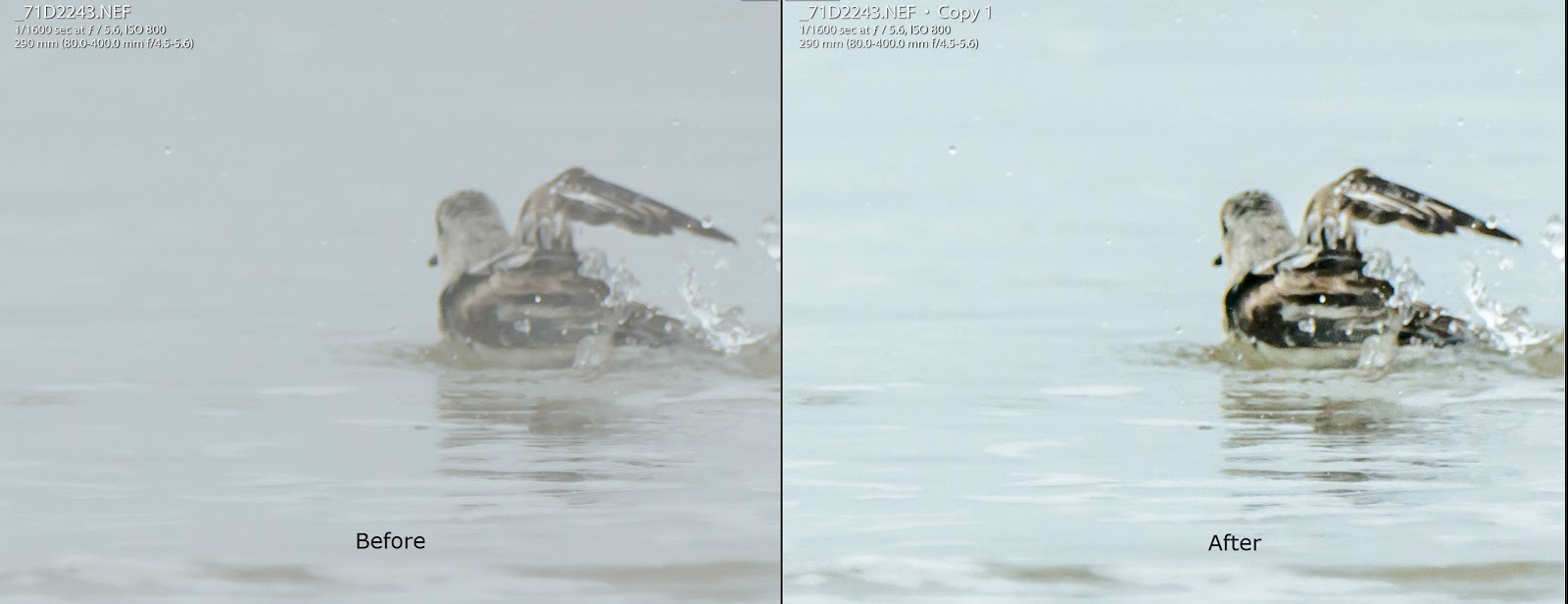
Left the house yesterday morning to travel out to Horseneck Beach and Gooseberry, at which time the sun was shining.  Arriving out at Horseneck, it was partly overcast, in the distance haze could be seen.  Walking down to the beach, we observed goals and shorebirds running all over the place.  There were small waves coming in and the tide was outgoing.  We picked an area close to the waters edge and sat down and waited for the birds to come to us, rather than trying to chase them.  After a period of time we did move laterally on the beach and and picked a new area to photograph.  As we were sitting there fog started to roll in and was decreasing visibility to at one point we were less than a 10th of a mile visibility and looking across the water.  We could not even see Gooseberry Neck.  The birds.  However did not pay any attention to the fog and kept moving up and down the beach, feeding and at times, chasing one another trying to maintain their own territory.  Normally, sanderlings follow the tide coming in and out running away as its incoming and following it out as it is outgoing.  However, when one of the shorebirds decide to take a bath.  They do not seem to care about the waves, and I am more interested in cleaning themselves..  Gulls flying through the fog give you a mystical appearance like that of a ghost, white on white.

Sanderling Chase Mode
Sanderling Feeding
Sanderling Bathing
Sanderling Bathing Partly on the Water
Herring Gull in the Fog White on White
Sanderling, Looking for Food
Sanderling Bathing, before Is in the Fog and after Is from Post Processing

As the fog grew thicker, we decided to travel over to Gooseberry to observe how everything looked from that vantage point.  By the time we got to Gooseberry, the fog had completely dissipated.  And we had bright sun shining.  On one of the seaweed covered rocks that was completely exposed due to the low tide was a few ducks.  The one I wanted a photograph of was a male American Scoter (Black Scoter).  The other ducks were young eiders.  We slowly moved down to the waters edge, the eiders left the rock and swam away, but the American Scoter continue to lay on the rock and just observe us.  The orange on its beak glowed in the sun.  After changing positions to get different views of the scoter, I turned to move again and hit a wet, slippery rock and fell backwards, happily keeping my camera and lens up so it did not hit the rock, or ground.  I did get a skinned elbow.  Handing my camera to my companion, and then fell completely over got up and since I really was not injured and I did not injured my camera set.  Oh well, took some more pictures and then went to the car to brush all the sand off of me.

American (Black) Scoter
My lens hood protected the front element of my lens from getting damaged and also because of the fog.  I treated my lens with fog eliminator which is distributed by Nikon.  It helps keep condensation from forming on the lens. It is not expensive and avaiable from Amazon http://amzn.to/1Ik0enV


Remember ReMask 5 will be on sale ($20 off) from August 25th – September 18th.  The coupon code "GetReMask5" use can take advantage of the discounted price of $49.99 (regularly $69.99).

You can link directly to the ReMask product page with this URL: http://www.topazlabs.com/aff/idevaffiliate.php?id=850&url=http://www.topazlabs.com/remask


Using the coupon code mborn you will receive a 15% discount on any or all of the Topaz plug-ins.


Help Support my blog by purchasing from Amazon. Clicking on this link and utilizing the link does not cost you anything.
BUY FROM AMAZON

Tuesday, April 21, 2015

My Experience Utilizing Nikon D 7100 and Nikon 80-400 mm Lens for Birds in Flight.

Last year, when I travel to Costa Rica, I borrowed from NPS the Nikon 80-400 mm lens and founded fast focusing and easy to handhold.  To complement my 70-200 F/2.8 lens.  I have been viewing the different long zoom lenses that are on the market.  Years ago I did have the Sigma 50-150, which I liked but when I obtained my 500 mm F/4 lens and my 70-200 mm F/2.8 lens, I gave the Sigma to my son to use.  Last summer, I did try the Tamron 150-600 mm lens, I liked the quality of the pictures, but however, it was heavy enough so that I could not comfortably handhold it.  So I finally made a decision, especially when Nikon had a discount on the 80-400 mm lens and bought it.

What I like about the lens, it is is compatible with all my cameras, whether they are FX or DX.  It is very handholdable, quick on focusing, sharp and I can utilize my Nikon 1.4 X converter on it.  This will give me an aperture of F/8 when the lens is fully extended to 400 mm.  I do a lot of my bird and animal photography at F/8 and I adjust my ISO so that I can obtain the shutter speed of at least 1/1250.

 I carry the combination with a new neck strap manufactured by Indigo Marble Camera Strap - Soft Padded Black Neoprene Lightweight Adjustable Comfortable Designer Sling for Your Valued Canon Nikon Pentax Sony DSLR - Anti-Slip - For Guys & Women - Quick Release Design - Protect Your Investment - 100% Money Back Guarantee , which finally, I have a strap that doesn't bother my neck or back.

Sunday morning I visited Allen Pond and then traveled down to Sapowet Marsh/ Beach in Tiverton, Rhode Island, where most of my photography were birds in flight.  Photography wise, to me the only drawback was it was a beautiful sunny day with only a rare cloud in the sky.  Therefore, most of the backgrounds are blue.

Great Cormorants in flight.  Noticed a white hip patch

Drake Mallard

Turkey Vulture soaring. It came right over our heads

Young Herring Gull

Young Herring Gulls Squabbling over a Whelk
Osprey hovering looking for a fish in the water below

Male and Female TreeSwallow Squabbling
So if you are a Nikon user and need a carry around long lens that is not too heavy then the Nikon 80-400 mm F/4.5-5.6 can be the lens for you.


Using the coupon code mborn you will receive a 15% discount on any or all of the Topaz plug-ins.


Help Support my blog by purchasing from Amazon. Clicking on this link and utilizing the link does not cost you anything.
BUY FROM AMAZON

Monday, February 23, 2015

Westport Harbor

Mute swan sitting on the ice
Sunday, after the snow stopped and the sun came out.  We traveled down to Westport Harbor hopefully to to do some photographing of ducks and gulls.  When we arrived, the sky was still overcast.  The tide was outgoing and there was still a lot of ice surrounding the docks.  We were able to see a number of different species of ducks, plus the gulls.  What I did was set the camera on manual, set my speed and aperture and went to auto ISO so I could obtain the correct exposure.

Greater black-back gulls be an opportunistic feeder were trying to get into the bait barrels on the dock to get a free meal.  Herring gulls, however, found snails and scallops to feed on.
Greater black-backed gull getting a skate from the bait bucket

Herring gull with a snail

Herring gull flying with a scallop in its beak


A Drake Bufflehead flew by and I was happy to capture one sharp image out of my series.  For tiny bird, they fly extremely fast.  We identified and photographed at the harbor and across on the other side near the Back Eddy and identified many species including Canada geese, common eiders, Bullhead, red-breasted merganser, hooded merganser, American Widgeon, scaup, common goldeneye and a horned Grebe.
Drake Bufflehead in flight

American Widgeon, feeding

and Bufflehead

Drake hooded merganser and hen red-breasted merganser

Canada goose landing over a scaup

Drake red breasted merganser


If the cold weather keeps up and all the ponds and habits freeze we should see more concentrations of ducks and other birds at locations that have open water, where there is food available.

Using the coupon code mborn you will receive a 15% discount on any or all of the Topaz plug-ins.


Help Support my blog by purchasing from Amazon. Clicking on this link and utilizing the link does not cost you anything.
BUY FROM AMAZON

Tuesday, August 26, 2014

Skimmer Ground Pod a Review

One of the best ways to obtain pictures of shorebirds, plus many other creatures is to get down to their level, rather than photographing them from above.  I have mainly utilize my tripods to do this, but, depending on which model I would use because some of them have center posts I could not get completely flat.  I noticed other photographers, utilizing the skimmer ground pod and photographers could be laying flat on the ground.  I decided to purchase one and see how it worked out.

The skimmer ground pod is approximately 10" in diameter and 1.5" high, the Skimmer's flat bottom allows it to slide and pan easily along the beach or mud without scooping up earth, protecting equipment from grit and moisture. The sides are turned out slightly to push sand and mud out and away, helping to keep debris from coming over the top. A protected area inside the plate can even be used to store teleconverters, extension tubes, and other incidentals for quick access while shooting.  The Skimmer was designed by photographers for photographers to meet our rigorous demands in the field.

The skimmer is made with heavy duty reinforced crush-proof molded plastic, weighs on the 15 ounces with an integrated raised mounting platform and a standard 3/8 -16 captive stainless steel bolt.  The bolt will accommodate a quick release clamp, a ball-head or a gimbal head, depending on what your preference is.  I utilized a gimbal head, which for me is me more freedom of movement.  The skimmer also has a reinforced attachment point to which you can add a clip or a lanyard to attach it to your belt or your camera bag.  Because the skimmer is plastic.  It is easy to clean and you can remove the stainless steel bolt with the hex wrench which is supplied.


The skimmer pod is available from Hunts Photo, and because you are a reader of my blog by clicking this URL you'll be able to purchase the skimmer at a 10% discount which is good until December 31, 2014.  You also can also call our store at (800) 221-1830 and use promos code: VaBit to purchase over the phone

The photographs of me were taken by my grandson Kyle.