Showing posts with label Utah. Show all posts

Wednesday, February 6, 2013

Pictures of the month February 2012-January 2013

Starlings on the back of a bison
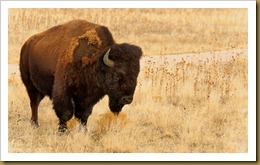
February 2012 did pose a problem in which picture to pick because I had a number of pictures that were dear to me. I ended up picking this picture of a bison resting in the grass on antelope Island In the Great Salt Lake. What really interested me about this photograph was the Starlings that were on its back and flying around the bison. Apparently they are picking up insects that are on the fur of the bison. I was out in Utah had a workshop hopefully to photograph bald eagles because the location out there is where there is usually 300 to 400 bald eagles overwintering. In 2012, with the warm weather and the general lack of snow, the bald eagles were not concentrated in the usual area and in fact in any one day the most we saw was up to a dozen. Antelope Island is a great place for photography with no only bison but antelopes and many different birds of prey.

I did have the same problem for January 2013, but selected this photograph of the beautiful sunset behind an old barn on Horseneck road in Westport Massachusetts. I have been observing this barn for many years as I drive past it on the way to the sanctuary. I have taken pictures of it in the past, but this day with the brilliant sunset behind it required another stop for more photographs. When you're traveling always keep your eyes open because you never know when a beautiful site will require you stopping and capturing it for posterity.
Sunset behind Old Barn

Sunday, February 26, 2012

More Utah Critters

This will be my last blog about my Utah trip.  Again, I wish to thank Natures Photo Adventures and Rob Palmer for a most enjoyable workshop.  I am planning again to return next year and to stay a little longer to travel to some of the locations in the area that I know about to photograph not only the scenes, but also the wildlife.
In this blog will be just photographs of some of the other animals and birds that I saw on this trip
American Bison:
Here the bison is being visited by European starlings
Starlings on the Bison's Back


- Bison in Snow_ROT9471 February 19, 2012 NIKON D3S
Bison in the Snow
Pronghorn:
Although these animals are known as pronghorn antelope, they are not related tothe true antelopes of the old world.

- _ROT7997-Edit February 18, 2012 NIKON D3S- Pronghorn_ROT8004 February 18, 2012 NIKON D3S- pRONGHORN_ROT8021 February 18, 2012 NIKON D3S The Pronghorn starting running toward our car and we thought it was attacking us, but was chasing another Pronghorn that was on the other side of the road.

There are also Mule Deer present in the area, I did observe one but was unable to take a photograph because a  truck came up the road and scared it.

Since the weather was warm, a number of the birds thought it was Spring, and were starting to sing. Among these, were the Western Meadowlark and the Red-winged Blackbird.

- Western Meadowlark Singing_ROT7804 February 18, 2012 NIKON D3S- _ROT7775 February 18, 2012 NIKON D3S- _ROT8243-Edit February 19, 2012 NIKON D3S

Horned Larks were also. If you look at the picture, you can see why they are called Horned Larks
- Horned Lark_ROT8483 February 19, 2012 NIKON D3S

Here are some of the other bird that were present in the area

- _D7K3873-Edit-Edit-Edit February 26, 2012 NIKON D7000
California Gull
- _ROT7524 February 18, 2012 NIKON D3S
Ring-necked Pheasant
Black-billed Magpie
Black-billed Magpie
Ring-billed Gull
Ring-billed Gull Catching a Fish


.

Friday, February 24, 2012

Antelope Island State Park

- _ROT9380-Edit-Edit February 19, 2012 NIKON D3S
Pronghorn on the Ridge
- _ROT9452-Edit February 19, 2012 NIKON D3S
American Bison
Antelope Island State Park is located in the Great Salt Lake and is the largest island in the lake.  Located on the island are free-roaming herds of bison, bighorn sheep, mule deer, and pronghorn antelope.  The bison were introduced to the island in 1893 and became the foundation for the present day herd of between 500 to 700 animals.  Depending on the month and season that you visit, you're viewing opportunities for wildlife will vary.
Antelope Island is reached by driving over a Causeway from Syracuse, Utah.  We found that the Causeway was an excellent location to view and photograph raptors.  In order to photograph the raptors, you have to photograph them from your car, by pulling over to the side of the road, and utilizing a support on the window for your camera and lens.  People use beanbags, I utilize a Puffin Pad for support for my equipment.
- _D7K3903-Edit February 18, 2012 NIKON D7000
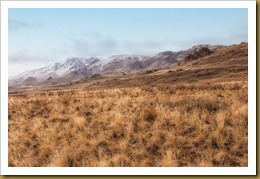
Looking Across the Great Salt Lake at the Mountains from Antelope Island
With Bison in the Meadow
History of the island showed that prehistoric people were living on the island more than 6000 years ago.  John C Fremont and Kit Carson is that explored the antelope Island in 1845, and they named it.  Antelope Island, after observing pronghorn antelope's grazing.  Fielding, Garr established a ranch on the island in 1848 and the ranch house is still standing on its existing foundation.,
- Antelope Island_D7K3920 February 18, 2012 NIKON D7000
Island Scenic
- _D7K3910-Edit February 18, 2012 NIKON D7000
Island Scenic
- _D7K3933-Edit February 18, 2012 NIKON D7000
Island Scenic
- Antelope Island_D7K3914 February 18, 2012 NIKON D7000
Island Scenic
The rock formations on the island are beautiful to behold. It's some of the rocks are covered with the Moss and lichen and will definitely be part of my next trip to photograph them in either early morning or late afternoon light.
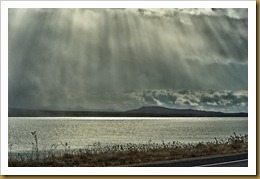
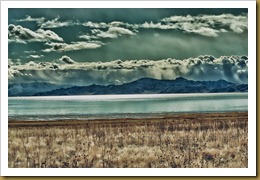
The last afternoon that we were on the island it started to snow and the pictures below show the storm over the island from the causeway
- Scenic Antelope Island_ROT9463_HDR February 19, 2012 NIKON D3S
Storm over Antelope Island

- Storm over Antelope Island_ROT9590_HDR February 19, 2012 NIKON D3S
Another view of the Storm

- Snow storm on Antelope Island_ROT9458 February 19, 2012 NIKON D3S
Another view of the Storm

- Storm Atelope B&W_ROT9584_HDR-Edit February 19, 2012 NIKON D3S
Another view of the Storm in B&W
 So if you visit the Great Salt Lake Region, Antelope Island is a worthy destination and an excellent place to spend at least one or 2 days exploring.  There is a $9 daily fee that is collected at the beginning of the Causeway
2-24-2012 2-28-03 PM

Thursday, February 23, 2012

Pied-billed Grebe

The Pied-billed Grebe Pied-billed Grebeis another bird that was very interesting to observe and photograph during my Utah trip.  They were located at the Farmington Bay Waterfowl Management Area, swimming around with American Coots.  They are the sole member of their genus and are distributed throughout North America, Central America, the Caribbean and temperate South America.
Pied-billed Grebes are found on open waters, including ponds, marshes and sluggish streams.  They are very rare on salt water.  Pied-billed Grebes are not strong fliers and usually escape from danger by diving.  They have a very short thick bill which has a black ring around it  In the summer. Pied-billed Grebes also are the only grebe that doesn’t have white wing patches. Their diet consists mainly mainly of aquatic invertebrates, and also on small fish and amphibians (frogs, tadpoles). During the time that I was observing the Pied-billed Grebes, they were either swimming, diving for food or resting.  I did see one Grebe capture a large fish (for it), which it eventually swallowed.  An American Coot kept It's eye on the Grebe, hoping that it could obtain the fish from the Grebe.Pied-billed Grege- _ROT7427-Edit February 18, 2012 NIKON D3S - Copy- _ROT7433-Edit February 18, 2012 NIKON D3S - Copy- _ROT7442-Edit February 18, 2012 NIKON D3S- _ROT7443-Edit February 18, 2012 NIKON D3S
Even though I was sitting on the bank low on the ground and close to the water, did not seem to bother the grebes as they went about their business.  Another interesting observation is that when they dive, they will travel a great distance.  On the water before they surface.- _ROT7516-Edit February 18, 2012 NIKON D3S- _ROT7518-Edit February 18, 2012 NIKON D3S- Pied-billed Grebe_ROT6147 February 17, 2012 NIKON D3S
As I have said in other posts, sitting still and observing will make the birds less afraid and you can learn how they go about their normal activities.

Wednesday, February 22, 2012

American Kestrel

Another interesting facet of my recent trip to Utah was the large number of American Kestrels that I observed. - Kestrel -Male_ROT6032 February 17, 2012 NIKON D3S They were everywhere, in the trees, on the marsh, on wires along the road, and along streets.  In fact, it reminded me somewhat of when we drive around here in Massachusetts and see Red-tailed Hawks sitting in trees along the road.  The numbers of red-tailed hawks that we see are much less in numbers, then the amount of kestrels that I saw in Utah, in a same area, probably due to the difference in size of the birds and the territory they cover.
In fact, in Massachusetts, the American Kestrel is declining markedly and they are one of the birds of concern from the Massachusetts Audubon Society.  Here is a link to the information that the Mass Audubon has online http://www.massaudubon.org/Birds_and_Birding/birdstowatch/kestrels/index.php
The American Kestrel is a beautiful bird with the male showing a reddish brown back and blue gray upper wing colors. - kESTREL_ROT6892 February 17, 2012 NIKON D3S The females wings are reddish brown. - kESTREL_ROT6806 February 17, 2012 NIKON D3S Both the male and female have pairs of black vertical slashes on the side of their pale face. 


In the air, they will hover with tails spread as they look for prey on the ground..- _ROT9561-Edit February 19, 2012 NIKON D3S


You can help increase the numbers of American Kestrels by building and hanging a nesting box for them.  - _ROT6816 February 17, 2012 NIKON D3Shttp://www.birds.cornell.edu/nestinginfo/downloads/Am%20Kestrel%20Screech-Owl%20N%20Saw-whet%20Owl.pdf.
- _ROT6051-Edit February 17, 2012 NIKON D3S

Monday, February 20, 2012

Farmington Bay and Eagles


-Eagle scenic_D7K3812  NIKON D7000 February 18, 2012
Overview of the marsh with an eagle on the trunk and the mountains in the background

I had looked on my friend Dave Hemmings web site www.natureadventures.com/, and found a workshop in Utah to photograph Bald Eagles. It was led by Rob Palmer  http://www.falconphotos.com/, a noted raptor photographer and a falconer.  Farmington Bay usually has the highest density of Bald Eagles in the lower 48 states. In fact, last year there was between 300-400 Eagles present.  However, this year because the weather has been warmer with a lot less snow and the impoundments are not frozen the density has been very much decreased.  I saw around 10-12 Eagles.  But, the photography was great with other species including Harriers, Kestrels, Coots, and Pied-billed Grebes plus many other species
Bald Eagle landing
Bald eagle landing
Bald Eagle Pair
Pair of bald eagles
-Eagle catching fish_ROT6315  NIKON D3S February 17, 2012
Bald Eagle catching a fish

-Eagle eating a fish_ROT8060  NIKON D3S February 19, 2012
Bald eagle eating a fish
 .
-Eagle _ROT7016  NIKON D3S February 18, 2012
Bald eagle on a old tree trunk

More “Gray Ghost”, the Male Northern Harrier

A short while ago, I had written a blog about "Gray Ghost" (http://photobee1.blogspot.com/2012/02/gray-ghost.html) and how it was the first time that I was able to photograph it.  On my photographic trip to Utah, I even got a better chance to photograph the male Northern Harrier.  The number of Northern Harriers that were present and active at the Farmington Bay Waterfowl Management Area and at Antelope Island State Park were at times mind-boggling.  The causeway leading to Antelope Island State Park has on both sides areas of grass and bushes that support prey for not only the harriers, but also Rough-legged Hawks and American Kestrels.  By driving slowly, and pulling over to the side.  You can photograph the raptors from your car.
During the night prior to the last day of photography, there was a small snowstorm, which left about 1 to 2 inches of snow in the valley.  Driving on the causeway, there was a very strong wind blowing across the causeway and across the Great Salt Lake.  The wind help keep the raptors in a hovering type mode.
I was able to photograph the "Gray Ghost" not only flying, but also perched on the ground and feeding on a mouse, that it had caught.  My companion, Middleton, was that he had been waiting 20 years to photograph "great ghost"perched.
-_D7K4145  NIKON D7000 February 19, 2012
Male in Flight - whitish underparts and black wing tips
-_ROT8461  NIKON D3S February 19, 2012
On the ground
-_ROT8408  NIKON D3S February 19, 2012
Screaming
-_ROT8380  NIKON D3S February 19, 2012
Eating
-Gray Ghost with mouse_D7K4159  NIKON D7000 February 19, 2012
Flying with mouse


For comparison, here is a female Northern Harrier in flight. Notice the darker wings and body and no large black tips on the wings.
-_D7K4130  NIKON D7000 February 19, 2012
There will be more blogs coming about my Utah trip, so stay tuned.